
What happened to our body when we are over 30? Healthy Aging and Longevity, what you need to know
Things You Need to Know Starting From Your 30s for Healthy Aging and Longevity
Your body doesn't suddenly get "old" just because you turn 30.
Aging is not a sudden event that starts when you reach a certain age, but rather a gradual process of change over time in the body's cellular, molecular, metabolic, and physiological systems.
However, after passing 30, most people may become more aware of things like body composition, muscle strength, metabolic health, sleep and recovery, reproductive hormones, and cardiovascular risk factors.
What is important is— Healthy aging is not about stopping getting older. It is about maintaining your healthspan — the years you live in good health — as long as possible as you age.
Therefore, rather than worrying that you are "getting old," your 30s should be seen as the time to build up a health reserve for the many years ahead.

1. You Should Start Focusing on Muscle Mass and Muscle Strength
As you age, skeletal muscle mass and muscle strength can gradually change.
Muscle is important not only for body shape but also for physical function, mobility, balance, glucose metabolism, and independence in later life.
Therefore, when talking about longevity, rather than focusing solely on body weight, you should also consider body composition and physical function.
Doing regular resistance training, having adequate physical activity, and taking care of nutrition starting from your 30s are crucial for maintaining muscle function as you get older.
For longevity, don't forget to measure "strength" rather than just "weight."
2. Do Not Easily Assume That "Metabolism Has Slowed Down"
When gaining weight after 30, many people tend to think it's because "metabolism has slowed down."
However, weight changes cannot be determined by metabolic rate alone.
Lifestyle factors such as decreased physical activity with age, increased sedentary time, changes in muscle mass, changes in dietary patterns, sleep deprivation, and chronic stress are also important.
Therefore, in your 30s, weight management should not be seen simply as "eating less," but should be viewed with a comprehensive approach: diet quality + physical activity + resistance training + sleep + metabolic risk management.
3. Bone Health Should Not Be Considered Only When You Are Older
Bone health is a lifelong process.
Bone remodeling continues throughout life, and as you age, the balance between bone formation and resorption can change.
Therefore, after age 30, resistance exercise + weight-bearing activity + adequate nutrition should be incorporated as a part of your lifestyle.
Because calcium and vitamin D status, nutritional adequacy, and fracture risk vary from person to person, individual risk assessment should be prioritized over blanket supplementation.
4. It Is Better to Know Cardiovascular Risk Factors Early
You should not ignore cardiovascular health after age 30 just because you think "I am still healthy right now."
Risk factors like hypertension, dyslipidemia, impaired glucose regulation, obesity, and smoking can impact cumulative cardiovascular risk over time.
Therefore, in preventive care, it is important to evaluate blood pressure, lipid profile, glycemic status, body composition, smoking status, family history, and physical activity according to an individual's risk profile.
"Having no disease yet" and "having no risk" are not the same thing.
5. If You Smoke — Try to Quit
Smoking cessation is one of the most important lifestyle changes with the highest benefits for longevity.
Tobacco smoke is associated with many diseases, including cardiovascular disease, chronic respiratory disease, and cancer.
Therefore, after age 30— Instead of saying "I only smoke a little a day," You should be thinking about "How do I quit?".
When trying to quit smoking, you don't have to struggle alone. You can consult a healthcare professional and utilize behavioral support, counseling, and appropriate smoking-cessation treatment options.
Even if you cannot quit yet, the day you start trying to quit is the day you take a crucial step forward.
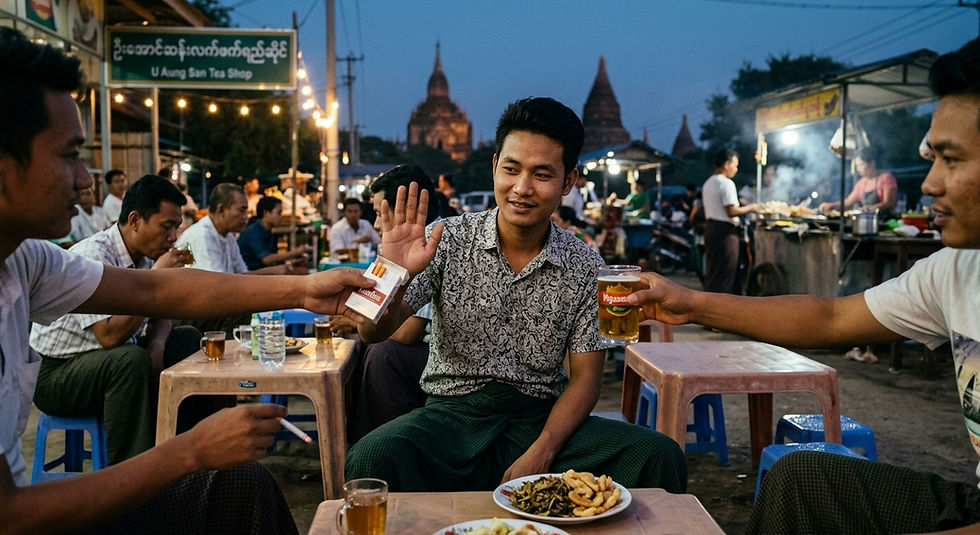
6. If You Drink Alcohol — Significantly Reduce the Amount
Alcohol might be a part of social life, but when considering health and longevity, you should also review the amount and frequency of your alcohol consumption.
Excessive alcohol consumption can be associated with liver disease, cardiovascular problems, certain cancers, mental health problems, and other health issues.
Therefore, for those who drink:
Reduce the frequency of drinking
Reduce the amount consumed per sitting
Have alcohol-free days
Do not use alcohol as a primary method to relieve stress
Specifically, you shouldn't assume there is no risk just because you say "I drink, but not every day." You need to re-evaluate the amount you consume and your health status.
If you prioritize longevity, reducing alcohol consumption as much as possible can be a beneficial lifestyle change.
7. Sleep and Recovery Are Not a Health Luxury
In your 30s, as career, family responsibilities, and social commitments increase, you tend to cut back on sleep.
However, sleep is a crucial physiological process for cognitive performance, mood, metabolic health, and physical recovery.
Therefore, in a longevity lifestyle, it is inappropriate to focus only on nutrition and exercise while forgetting about sleep.
You should focus on a regular sleep schedule, adequate sleep duration, and sleep quality.
Specifically, if you have symptoms like persistent snoring, witnessed apnoea, or excessive daytime sleepiness, you shouldn't just attribute it to "poor sleep due to getting older," but should consider whether there is an underlying sleep disorder.
8. Hormonal Changes Are Not the Same for Everyone
Changes in reproductive hormones can occur as you age.
But the generalization that "hormones drop as soon as you pass 30" is not appropriate for clinical practice.
Hormonal status can be associated with factors like sex, age, reproductive stage, body composition, medications, and underlying diseases.
If there are noticeable menstrual changes, persistent fatigue, sexual dysfunction, vasomotor symptoms, or other clinically significant symptoms, appropriate evaluation should be done based on the symptoms and the clinical context.
Self-prescribing hormone supplements or "anti-aging hormones" is not a longevity strategy.
9. "Age" Is Not the Only Cause of Skin Aging
As you age, skin structure and regenerative capacity can change.
However, besides intrinsic aging, chronic ultraviolet exposure is also an important factor for photoaging.
Therefore, basic preventive measures like sun protection, smoking avoidance, balanced nutrition, adequate sleep, and appropriate skincare are essential for skin longevity.
Rather than the word "Anti-aging," viewing it through the concept of "healthy skin aging" is more appropriate.
The Most Important Lifestyle Habits for Longevity
Longevity cannot be built with just one supplement, one pill, or a single "anti-aging product."
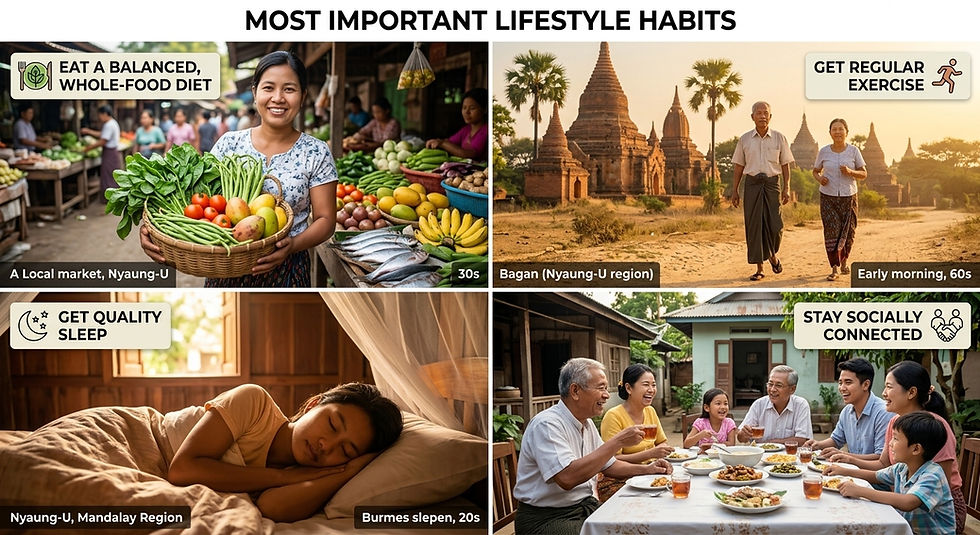
The basics are simple:
Move: Maintain regular physical activity and aerobic exercise.
Build Strength: Build muscle strength with resistance training.
Eat Well: Prioritize a nutritious and balanced diet.
Don't Smoke: If you smoke, try to quit. Get smoking-cessation support from a health professional if needed.
Drink Less: If you drink alcohol, try to significantly reduce the amount and frequency.
Sleep Well: Set quality sleep as a daily health priority.
Manage Your Risk Factors: Monitor blood pressure, lipids, glucose, body composition, and other relevant risk factors according to your risk profile.
Stay Connected: Include social connection, meaningful relationships, and mental well-being as a part of health.
Consider Healthspan
Longevity should not be measured by lifespan alone.
If someone lives to 90 but spends their final years with severe disability, would that long life match the longevity we desire?
That is why healthspan is important.
It means— Increasing the years you can live not just long, but healthily, independently, and meaningfully.
Being Over 30 Does Not Mean You Are "Old".
There can be changes in the body as you pass 30.
However, you shouldn't view these changes solely as meaning "getting old."
Instead— You should start asking yourself from your 30s, "How healthy do I want to be in my 60s, 70s, and 80s?".
Because healthy aging is not a project to be fixed when you are older, but a process built gradually over many years.
Take-Home Message
Once you are over 30—
Maintain muscle.
Protect your heart.
Take care of your bones.
Prioritize sleep.
Try to quit smoking if you smoke.
Drastically reduce alcohol if you drink.
Be aware of metabolic risk factors.
Don't forget mental and social health.
Also, let's start thinking about longevity not just as "living longer"— But with the goal of "being able to live with good health as we live longer."
Your 30s are not the end of youth.
They can be the beginning of intentional healthy aging.


Comments