
How Exercise Makes You Live Longer(Facts Checked)
Why does exercise make us live longer?
"I want to live a long life" is a wish shared by almost everyone.
However, what is even more important than lifespan alone is the number of years we can live healthily and independently (healthspan). This is where exercise or physical activity plays a crucial role.
Exercising is not just for weight loss. It affects many bodily systems, including the cardiovascular system, blood pressure, blood sugar, muscles, brain, bones, mental health, and sleep.

According to WHO guidelines, regular physical activity is beneficial for many health conditions, including cardiovascular disease, type 2 diabetes, certain cancers, and mental health.
Benefits of Exercise for overall health
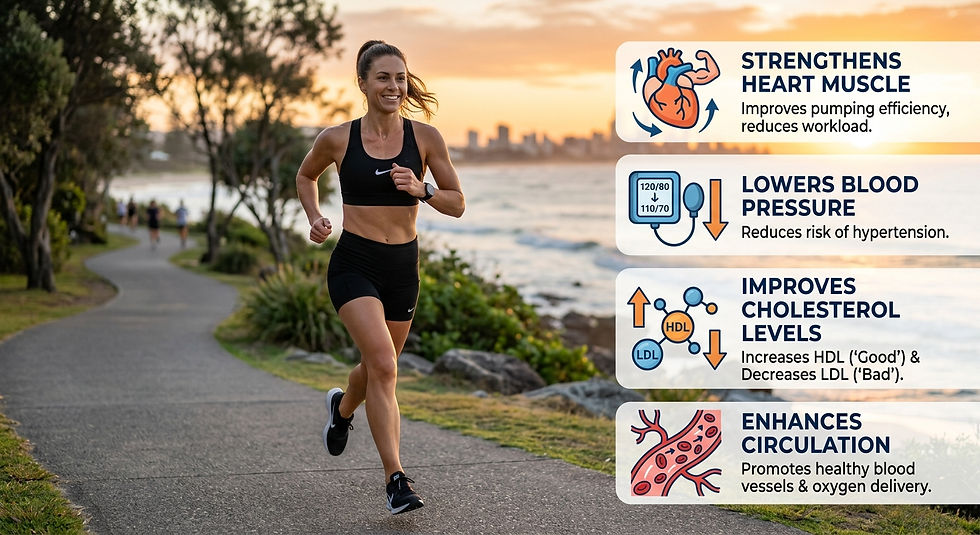
Exercise protects the heart
Engaging in regular aerobic exercise improves cardiovascular fitness and helps control blood pressure and cardiovascular risk factors. Regularly doing aerobic activities such as walking, jogging, cycling, and swimming is essential for heart and vascular health. Systematic reviews and meta-analyses combining numerous studies have found that individuals with higher physical activity levels have a lower risk of all-cause mortality and cardiovascular mortality. Therefore, exercise should not be viewed merely as "something done to lose weight," but as an important component of cardiovascular prevention.
Exercise improves blood sugar and metabolic health
During exercise, skeletal muscles utilize glucose. Regular physical activity improves insulin sensitivity and glucose regulation, helping reduce the risk of type 2 diabetes. The benefits of exercise should not be measured by "weight loss" alone. Sometimes, even without significant weight loss, there can still be improvements in fitness, blood pressure, metabolic health, and insulin sensitivity.
Exercise and Cancer Risk
Numerous studies have also shown the connection between physical activity and cancer risk. An umbrella review found that physical activity is associated with a lower risk across several cancer sites, including colon, breast, endometrial, lung, esophageal, and pancreatic cancers, as well as meningioma.
The importance of physical activity for existing cancer patients is also increasingly studied. A systematic review and meta-analysis on cancer survivors found that higher physical activity levels before or after diagnosis are associated with better survival outcomes.
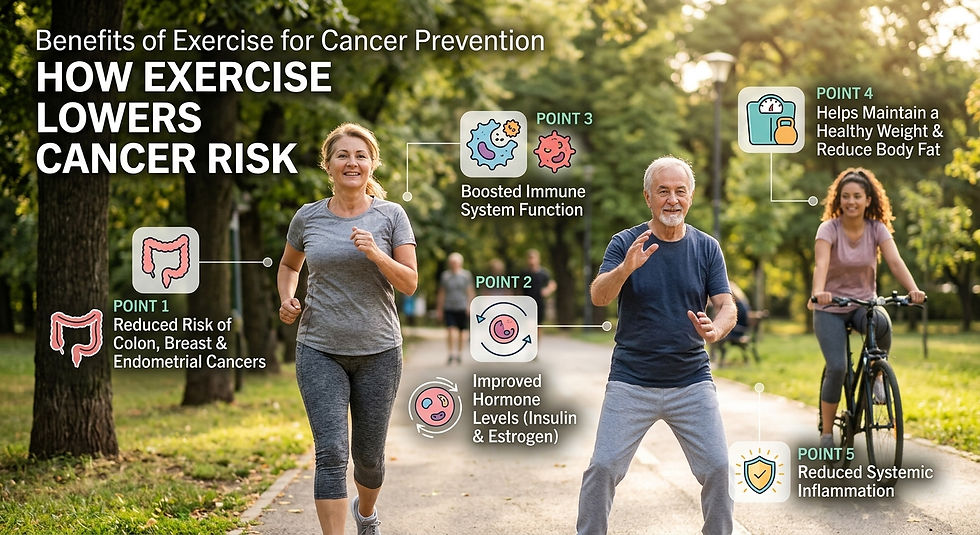
Furthermore, a systematic review and meta-analysis published in 2026 involving 13 randomized controlled trials and 3,282 cancer patients found a reduction in all-cause mortality associated with physical-activity interventions. However, study quality, intervention type, and cancer populations need to be considered individually. Therefore, exercise should not be seen as a replacement for cancer treatment, but understood as a component of comprehensive cancer care.
As we age, muscle becomes even more important
As people age, muscle mass and muscle strength can decrease. Therefore, strength training becomes crucial as we get older. Resistance exercises such as squats, resistance-band exercises, body-weight exercises, and weight training help maintain muscle strength.
For adults aged 65 and older, the WHO recommends incorporating physical activities that emphasize balance and coordination, in addition to muscle-strengthening exercises. The purpose is not merely "to get bigger muscles.
" It is to be able to walk, climb stairs, get up from a seated position independently, reduce the risk of falls, and live independently as we age.''
Exercise is also important for brain and mental health
Physical activity is important not only for the body, but also for brain health and mental health. According to the WHO, regular physical activity is associated with reduced symptoms of depression and anxiety, as well as improved cognitive health and overall well-being. Therefore, exercise can be viewed not just as "body medicine," but also as a form of lifestyle medicine for brain health.
How much exercise is enough?
According to WHO guidelines,
for adults aged 18–64 years:
Moderate-intensity aerobic activity: 150–300 minutes/week
(Or)
Vigorous-intensity aerobic activity: 75–150 minutes/week
(Or)
an equivalent combination of both.
In addition, muscle-strengthening activities involving all major muscle groups are recommended at least 2 days a week. For individuals aged 65 and older, balance training should also be considered in addition to aerobic activity and strength training.
Is it "the more, the better"?
There may be a dose-response relationship between physical activity and mortality risk. Studies show that those with higher activity levels have a lower risk of all-cause mortality, and systematic reviews/meta-analyses indicate that maintaining regular physical activity throughout adulthood is associated with lower mortality risk.
However, it does not mean "do as much as humanly possible" for everyone. Age, fitness level, comorbidities, musculoskeletal conditions, and current physical capacity must be taken into account.
The key is consistency.
You can start with 10 minutes a day.
For someone who is not currently exercising, thinking "I can't do 150 minutes a week yet, so I won't do anything at all" is inappropriate.
One of WHO's core messages is: “Any amount of physical activity is better than none.”
Therefore:
At the beginning: Walk 10–15 minutes a day.
Later: Gradually increase to 20–30 minutes.
In the long run: Aim to reach around 150 minutes per week.
Incorporate strength training about 2 days a week.
What matters is not a perfect plan, but a sustainable plan.
"Any amount of physical activity is better than none".
Don't forget about sitting time. Having set time for exercise does not mean you can ignore sitting all day long. The WHO guideline also emphasizes reducing sedentary behavior. For example:
Getting up and moving around frequently during long periods of sitting
Walking to nearby places instead of driving
Using the stairs
Personally engaging in household chores
Everyday physical activities like these are also included in total physical activity.
Can exercise alone make you live longer?
No
While exercise is an important component of healthy longevity, it is not a magic bullet. Not smoking, eating a healthy diet, getting good sleep, controlling blood pressure and blood sugar, and having proper preventive healthcare and screenings are also crucial for healthy aging. Exercise combines with these factors to form the foundation of a healthy lifestyle.
Final point to keep in mind: The benefits of exercise should not be measured solely by the single number of "How many years longer will I live?"
What is more important is:
Having a well-functioning heart,
Being able to walk,
Having strong muscles,
Being able to climb stairs,
Having a healthy brain,
Sleeping well,
Having good mental health, and
Being able to live independently in old age.
Therefore, exercise is not just about living longer. It is about spending those longer years healthier and more independent.
Start small. Move regularly. Build strength. Stay consistent.
"Healthy aging does not begin when you get old. It begins with the steps you take today.''
References
World Health Organization. WHO Guidelines on Physical Activity and Sedentary Behaviour. Geneva: World Health Organization; 2020. https://www.who.int/publications/i/item/9789240015128
Kyu HH, et al. Physical activity and risk of breast cancer, colon cancer, diabetes, ischemic heart disease, and ischemic stroke events: systematic review and dose-response meta-analysis. BMJ. 2016;354:i3857. https://pubmed.ncbi.nlm.nih.gov/27510511/
Physical activity trajectories and accumulation over adulthood and their associations with all-cause and cause-specific mortality: a systematic review and meta-analysis. British Journal of Sports Medicine. 2025. https://pubmed.ncbi.nlm.nih.gov/40639966/
Rezende LFM, et al. Physical activity and cancer: an umbrella review of the literature including 22 major anatomical sites and 770,000 cancer cases. British Journal of Sports Medicine. 2018;52:826–833. https://pubmed.ncbi.nlm.nih.gov/29146752/
Cannioto R, et al. Physical Activity and Mortality in Cancer Survivors: A Systematic Review and Meta-Analysis. Medicine & Science in Sports & Exercise. 2021. https://pmc.ncbi.nlm.nih.gov/articles/PMC7050161/
Guillermou H, et al. Physical activity reduces all-cause mortality in patients with cancer: a systematic review and meta-analysis of randomized controlled trials. Cancer Treatment Reviews. 2026;145:103122. https://pubmed.ncbi.nlm.nih.gov/41894932/
Liu Y, et al. Dose-response association between the daily step count and all-cause mortality: a systematic review and meta-analysis. Journal of Sports Sciences. 2022;40:1678–1687. https://pubmed.ncbi.nlm.nih.gov/35819337/
Ekelund U, et al. Association between physical activity and all-cause and cardiovascular mortality: a systematic review and meta-analysis. https://pmc.ncbi.nlm.nih.gov/articles/PMC6527136/


Comments